The International prize pools, year by year
From $1.6 million paid by Valve in 2011 to $40 million raised by players in 2021, and back down to a few million: every edition in one table, with the mechanism behind the numbers.
When DotaNews.net was filing stories in 2015 and 2016, the prize pool of The International was a daily news beat. A counter on the Dota 2 site ticked upward, stretch goals unlocked, and each million got its own headline. Read ten years later, those short items are a record of the steepest part of a curve that ran from $1.6 million in 2011 to $40 million in 2021 and then fell back to a few million. This guide puts every edition side by side and explains the mechanism behind the numbers.
Every International, 2011 to 2026
Totals below are final prize pools in US dollars as listed in the tournament tables on Wikipedia, which follow Valve's published figures.
| Year | City | Champion | Final | Runner-up | Prize pool |
|---|---|---|---|---|---|
| 2011 | Cologne | Natus Vincere | 3–1 | EHOME | $1,600,000 |
| 2012 | Seattle | Invictus Gaming | 3–1 | Natus Vincere | $1,600,000 |
| 2013 | Seattle | Alliance | 3–2 | Natus Vincere | $2,874,380 |
| 2014 | Seattle | Newbee | 3–1 | Vici Gaming | $10,923,977 |
| 2015 | Seattle | Evil Geniuses | 3–1 | CDEC Gaming | $18,429,613 |
| 2016 | Seattle | Wings Gaming | 3–1 | Digital Chaos | $20,770,460 |
| 2017 | Seattle | Team Liquid | 3–0 | Newbee | $24,787,916 |
| 2018 | Vancouver | OG | 3–2 | PSG.LGD | $25,532,177 |
| 2019 | Shanghai | OG | 3–1 | Team Liquid | $34,330,068 |
| 2020 | Planned for Stockholm; postponed because of the COVID-19 pandemic and held in 2021 | ||||
| 2021 | Bucharest | Team Spirit | 3–2 | PSG.LGD | $40,018,195 |
| 2022 | Singapore | Tundra Esports | 3–0 | Team Secret | $18,930,775 |
| 2023 | Seattle | Team Spirit | 3–0 | Gaimin Gladiators | $3,143,063 |
| 2024 | Copenhagen | Team Liquid | 3–0 | Gaimin Gladiators | $2,602,164 |
| 2025 | Hamburg | Team Falcons | 3–2 | Xtreme Gaming | $2,881,791 |
| 2026 | Shanghai | Team Spirit | 3–2 | Team Vision | $3,906,263 |
2011–2012: Valve pays the whole bill
The first International was announced on August 1, 2011 and played at Gamescom in Cologne from August 17 to 21. Sixteen invited teams competed, and the event doubled as the first public showing of Dota 2. Valve funded the entire $1.6 million pool, including a $1 million grand prize that went to Natus Vincere; runners-up EHOME took $250,000. A year later the tournament moved to Benaroya Hall in Seattle with the same total and the same $1 million for first place, won this time by Invictus Gaming.
A million dollars for one team was already an unheard-of sum for the scene. The archive's own retrospective on TI audiences recalls that people who did not follow Dota tuned in to the first event mainly to check whether the money was real.
2013: the Compendium
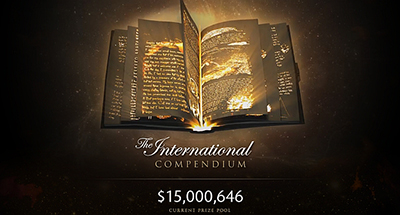
In May 2013 Valve announced the Compendium, an in-game interactive booklet for the third International. A quarter of the revenue from every sale was added to the base $1.6 million. Buyers got virtual items and predictions to fill in; the tournament got a pool that grew for as long as fans kept buying. TI3 closed at $2,874,380, at that point the largest prize pool esports had seen. Alliance won it, 3–2 over Natus Vincere.
The model has kept the same core rule ever since: 25 percent of sales go to the players. Everything that changed later, including the name, the price tiers and the rewards, was built on top of that split.
2014–2016: the years this archive covered
The 2014 Compendium added stretch goals, rewards that unlocked for every owner when the pool crossed set marks. Eleven days after it went on sale, the pool had grown from $1.6 million to more than $6 million and every announced goal had been cleared. The final figure was $10,923,977, and Newbee collected over $5 million of it.
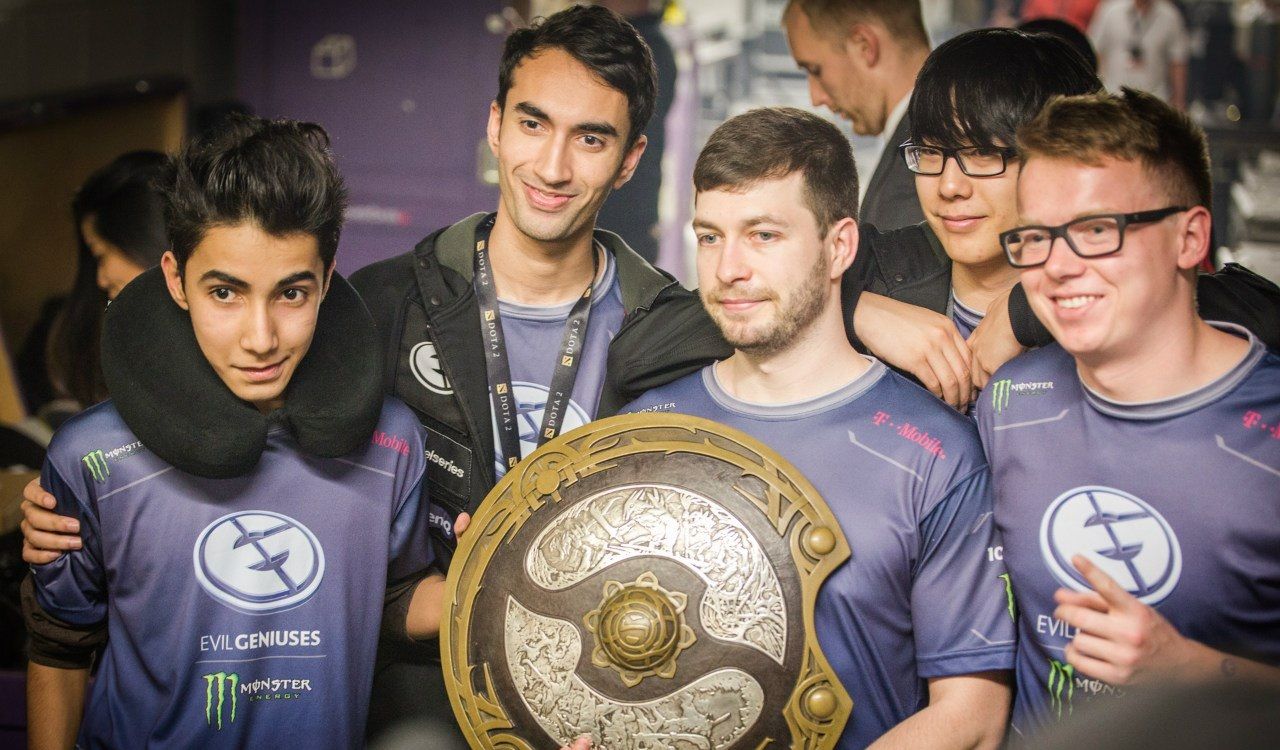
The 2015 campaign is where DotaNews.net picked up the story. On May 8 the site reported the pool passing $6.5 million at a pace of about half a million a day. By early June the total had overtaken the whole of 2014. On July 3 came the $15 million mark, which unlocked the last stretch goal Valve had set, and nine days later $16 million. The pool closed at $18,429,613 after roughly 100 days of sales. Evil Geniuses beat CDEC Gaming 3–1 in the final and took $6,634,661.
For 2016 the booklet was renamed the Battle Pass. The start was faster again: according to the archive's report, fans put in $2,604,753 on the first day, and the pool cracked $10 million after 18 days, against 31 days in 2015 and 39 in 2014. By the end of July it had passed the TI5 total, and it finished at $20,770,460. Wings Gaming, a Chinese team that came through the regional qualifier, won $9,139,002 by beating Digital Chaos 3–1.
| Milestone | TI5 (2015) | TI6 (2016) |
|---|---|---|
| Days to reach $10 million | 31 | 18 |
| Final prize pool | $18,429,613 | $20,770,460 |
| Champion's share | $6,634,661 | $9,139,002 |
| Directly invited teams | 10 | 6 |
2017–2021: the climb to $40 million
Each of the next four editions set a new record. Team Liquid's 3–0 over Newbee in 2017 was worth nearly $11 million from a pool of $24,787,916. The tournament left Seattle for the first time in 2018, when OG won in Vancouver, and OG repeated in Shanghai a year later with $34,330,068 on the table, becoming the first team to win the event twice.
The 2020 edition was planned for Stockholm and postponed because of the pandemic. It was eventually played as The International 2021 at the Arena Națională in Bucharest. Its pool of $40,018,195 remains the largest for a single esports event. Team Spirit won 3–2 against PSG.LGD.
2022 onward: the pool shrinks
The International 2022 in Singapore was the first edition whose pool did not beat the one before it: $18,930,775, less than half of the Bucharest total and close to the 2015 figure. The following year the drop was far steeper. For The International 2023 Valve sold a smaller Compendium in place of the traditional Battle Pass, and the 25 percent share from its sales added about $1.78 million. The pool closed at $3,143,063.
The 2024 total of $2,602,164 is the smallest since crowdfunding began in 2013. The two editions after it came in slightly higher: $2,881,791 in Hamburg in 2025 and $3,906,263 in Shanghai in 2026, where Team Spirit became the first three-time champion.
The format around the tournament changed in the same period. The Dota Pro Circuit, the points system that had decided direct invitations since the 2017–2018 season, ended after 2023. Since 2024 some teams receive direct invitations and the remaining places are filled through regional qualifiers, which is close to how invitations worked in the years this archive covers.
How the money is split
The total is one number; the split is another. In the Valve-funded years first place took $1 million of $1.6 million. Under crowdfunding the champion's share stayed large but the remainder was spread across all sixteen teams: Evil Geniuses received about 36 percent of the 2015 pool, Wings Gaming 44 percent of the 2016 pool.
The trophy is the same every year. The Aegis of Champions is a shield cast in bronze and silver by the prop studio Weta Workshop, and the names of the winning players are engraved on its reverse. Compendium owners who reached a high enough level in some years were sent a miniature replica.
Reading the old headlines now
A few things stand out when the archive's prize pool stories are read against the full table. The growth they describe was real and it lasted five more editions after the site stopped publishing. The rule that drove it was simple and never changed: a quarter of what fans spent. And the decline after 2021 came from a change in what Valve sold, since the share itself was the same in 2023 as in 2013. The original items are collected under the TI5 and TI6 tags, and the site's June 2016 TI6 information page is kept as it was.
Which International had the biggest prize pool?
The International 2021 in Bucharest, with $40,018,195. It is still the largest prize pool for a single esports event. Team Spirit won it 3-2 against PSG.LGD.
How much of the Battle Pass went to the prize pool?
25 percent. Since the first Compendium in 2013, a quarter of the revenue from the tournament's in-game pass has been added to the base prize pool; the split did not change when the pass was renamed Battle Pass in 2016.
Why did the prize pool fall so sharply in 2023?
For The International 2023 Valve sold a smaller Compendium in place of the large Battle Pass of earlier years. The 25 percent share of its sales added about $1.78 million, and the pool closed at $3,143,063, down from $18.9 million in 2022.
How much did the TI5 and TI6 winners receive?
Evil Geniuses received $6,634,661 for winning The International 2015. Wings Gaming received $9,139,002 for winning The International 2016.