How Dota 2 tournaments are watched: streams, DotaTV, arenas and the numbers
567,000 at the TI2 final, 4.6 million at TI5: the audience figures the archive collected in 2015, and the streams, in-game tickets, TV slots and arena seats behind them.

Two days after The International 2015 ended, DotaNews.net published a short piece with a simple question for a headline: How many people watched each TI. It collected the peak audience figures that had been reported for each edition and noted that the number roughly doubled every year. The article is a useful starting point for a wider question that the news items take for granted: where, and how, did people watch professional Dota 2 in those years, and what has changed since?
The archive's count, edition by edition
The figures below are the ones given in the August 2015 article. They are peak concurrent viewers as reported at the time, and the article is open about its gaps: it found no reliable number for the first event, and it points out that viewing parties and cinemas are not counted.
| Edition | Final | Peak audience (as reported in 2015) |
|---|---|---|
| The International 2011 | Natus Vincere vs EHOME | no accurate data |
| The International 2012 | Invictus Gaming vs Natus Vincere | 567,000 |
| The International 2013 | Alliance vs Natus Vincere | about 1,000,000 |
| The International 2014 | Newbee vs Vici Gaming | about 2,000,000 |
| The International 2015 | Evil Geniuses vs CDEC Gaming | 4,600,000 |
Other sources agree on the outline. The encyclopedia entry on the tournament says The International 2013 was watched by over a million concurrent viewers at its peak through live streaming sites such as Twitch, and describes later peaks as being in the millions. The archive's remark about the first event rings true as well: many people who had no interest in Dota watched in 2011 simply to see whether a million-dollar prize for a video game was real.
The stream: Twitch and its languages
The main way to watch The International has been the live streaming platform Twitch. Coverage is produced by dedicated esports broadcast teams who provide commentary, analysis, predictions and player interviews around the matches, in the manner of a traditional sports broadcast. A panel of analysts handles the time before and after games; a play-by-play caster and a colour commentator call the match itself.
Several streams run in parallel in different languages, chiefly English, Russian and Chinese. Some editions have also offered a newcomer stream, with commentary aimed at viewers who do not know the game. This matters when reading audience figures: a single peak number adds up audiences that were watching quite different broadcasts.
Platforms have widened since. For The International 2023 the group stage was shown through online broadcasts on several platforms, including YouTube.
Inside the game: DotaTV and tickets
Dota 2 has always had a second way to watch that most sports lack: the game client itself. Through DotaTV a viewer can load a live match in the game, move the camera freely, follow one player's view or listen to casters in the client.
In the years this archive covers, access to third-party tournaments in the client was sold as a ticket. The prices are still recorded in the Liquipedia entries for events the archive reported on:
| Event | Dates | DotaTV access |
|---|---|---|
| StarLadder StarSeries season 11 | January 2015 | $9.99 ticket |
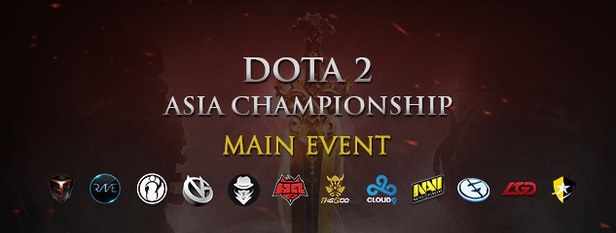
| Dota 2 Asia Championships | Jan–Feb 2015 | through the event Compendium |
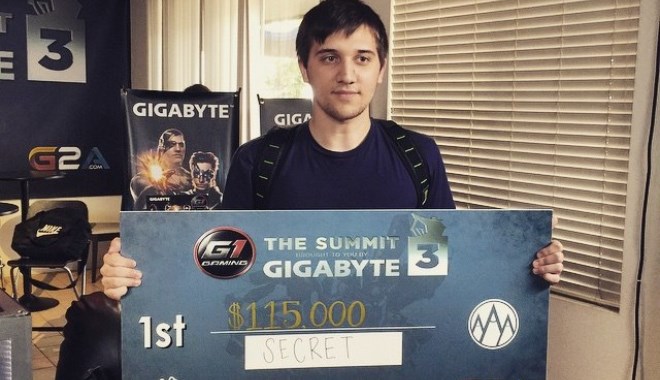
| The Summit 3 | May 2015 | $9.99 ticket |
| ESL One Frankfurt 2015 | June 2015 | $1.99 ticket |
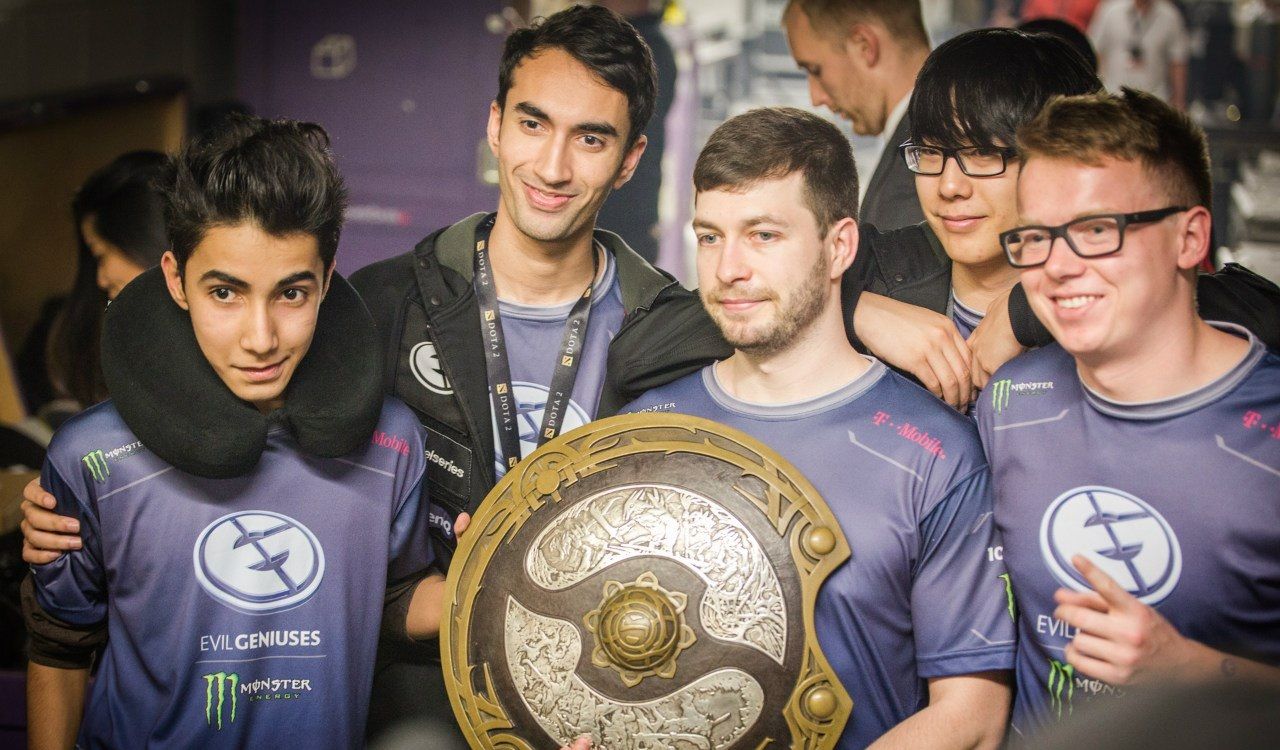
Tickets and bundles also fed prize pools. When The Summit 3 was announced, the archive reported a base pool of $100,000 from the organisers and sponsors, plus 20 percent of the event's compendium sales and 10 percent from a custom treasure chest. The tournament, won by Team Secret in a result the archive reported in May 2015, ended with a total of $271,685. The Dota 2 Asia Championships used a Compendium of its own, on the model of The International, and reached $3,057,519; the archive's report on Evil Geniuses winning it is one of its longest match stories.
In 2016 the client gained another option. Valve added virtual reality spectating, which reviewers at the time compared to watching a match on television with the ability to step onto the field.
Television
The International 2014 was the first to reach ESPN's networks. The tournament was streamed on ESPN3, and ESPN2 aired a preview of the grand final between Newbee and Vici Gaming. For Seattle there was a local connection too: KCPQ news anchor Kaci Aitchison acted as a host at The International 2013, doing behind-the-scenes segments and interviews, and returned in later years.
In the arena
The first event was held on the show floor at Gamescom in Cologne. The second and third were played in Benaroya Hall in Seattle, a concert hall with 2,500 seats, with the teams in glass booths on stage. From 2014 to 2017 the venue was KeyArena.
Demand outran supply quickly. Tickets for The International 2014 sold out within an hour of going on sale. A year later the tickets for The International 2015 were gone in about five minutes.
The archive has the details for 2016 in TI6 dates revealed. A midweek ticket for the first four days cost $75 and a finals ticket for the last two days $100. Midweek ticket holders could watch the finals only from an outdoor viewing area on the arena grounds. Sales were limited to five tickets of each type per household, seating was unassigned, and there were no VIP tickets that year.
For everyone else there were pubstomps, viewing parties in bars and cinemas organised by local communities. The 2015 article mentions them only to say that nobody had counted them.
Films about the tournament
Valve has also covered its own event in documentary form. After The International 2012 it released a free documentary on the event, with team interviews from the preliminary stages through to the final. In 2014 came Free to Play, a feature-length film that follows three players through the first International in 2011. From 2016 the company produced True Sight, an episodic series treated as a successor to Free to Play, with episodes built around the 2017, 2018, 2019 and 2021 tournaments. True Sight was discontinued after the 2022 tournament.
Why the 2015 numbers looked the way they did
The doubling that the archive article noticed lines up with what was happening around the tournament. The Compendium arrived in 2013 and turned the prize pool into a running story for three months before each event; by 2015 the pool was the largest in esports and its milestones were news in the general gaming press. Television picked the event up in 2014. And the game itself was near its peak: Dota 2 was the most played game on Steam for four years after release, with more than a million concurrent players at its height.
The article's own caution is worth keeping, though. Its figures came from announcements and tweets, each made by a party with a reason to quote the largest available number, and they mix platforms and languages. They are best read as an order of magnitude: hundreds of thousands in 2012, about a million in 2013, a few million by 2015.
Watching the old matches now
The video embeds in the archive's articles pointed to YouTube and are kept where they were. For everything else, the match reports stand in. A piece like Path of the champions, on Evil Geniuses' road to the 2015 title, or the game-by-game account of the Frankfurt Major final, was written for people who had just watched the games. Ten years on they read as a record of what viewers at the time thought was worth remembering. For the money behind those audiences, see the guide to prize pools year by year.
How many people watched The International 2015?
The archive's August 2015 article gives a peak of 4,600,000 viewers on the live webcast, up from about 2,000,000 for 2014 and about 1,000,000 for 2013. These are figures reported at the time and do not count viewing parties.
Where is The International broadcast?
Mainly on the streaming platform Twitch, with parallel streams in several languages, chiefly English, Russian and Chinese. Matches can also be watched inside the Dota 2 client, and later editions were shown on other platforms including YouTube.
Was The International ever shown on television?
Yes. The International 2014 was streamed on ESPN3, and ESPN2 aired a preview of the grand final between Newbee and Vici Gaming.
How much did tickets to TI6 cost?
According to the archive's April 2016 report, a midweek ticket for the first four days cost $75 and a finals ticket for the last two days cost $100, sold through Ticketmaster and limited to five of each type per household.
Sources
- DotaNews.net archive: How many people watched each TI (August 2015)
- Wikipedia: The International (esports), history and media coverage
- Wikipedia: The International 2014
- Wikipedia: The International 2023 (venue and broadcast)
- Wikipedia: Dota 2 (player numbers, VR spectating)
- Liquipedia: The Summit 3, ESL One Frankfurt 2015, StarLadder StarSeries Season 11, Dota 2 Asia Championships 2015